The Complete Guide to Self-Destructing Messages: How They Work and When to Use Them

Sarah Mitchell
2 April 2026
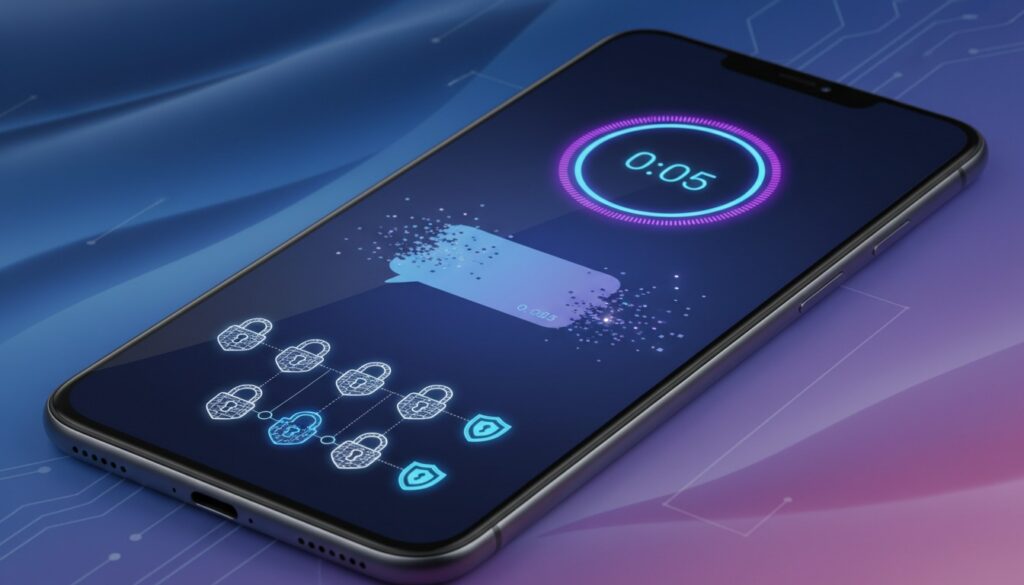
The Complete Guide to Self-Destructing Messages: How They Work and When to Use Them
Introduction
In an era where digital privacy concerns are at an all-time high, self-destructing messages have emerged as a crucial tool for protecting sensitive communications. These ephemeral messages automatically delete themselves after being read or after a predetermined time period, leaving no digital trace behind.
Whether you’re sharing confidential business information, personal secrets, or simply want to maintain better digital hygiene, understanding how self-destructing messages work can revolutionize your approach to digital communication. This comprehensive guide will explore the technology behind ephemeral messaging, examine popular platforms, and provide practical strategies for implementing this powerful privacy tool in your daily life.
How Self-Destructing Messages Work
The Technology Behind Ephemeral Messaging
Self-destructing messages rely on several sophisticated technologies working in harmony:
Client-Side Deletion: The most basic form involves the messaging app automatically deleting content from the recipient’s device after viewing. This method depends on the app’s integrity and the user not taking screenshots or photos.
Server-Side Controls: More advanced systems implement server-side deletion, where messages are removed from the service provider’s servers after the specified time. This ensures that even if someone gains access to the servers, the messages are no longer retrievable.
Cryptographic Keys: Premium solutions use rotating encryption keys that become invalid after message expiration, making it mathematically impossible to decrypt old messages even if they’re somehow recovered.
Timer Mechanisms and Triggers
Different platforms offer various trigger mechanisms for message destruction:
- Time-based deletion: Messages disappear after a set duration (seconds, minutes, hours, or days)
- View-based deletion: Content vanishes immediately after being opened or read
- Combined triggers: Some systems use both time and view-based triggers for enhanced security
- Burn-after-reading: Messages delete themselves after a single viewing, regardless of time elapsed
- Messages disappear after 1-10 seconds of viewing
- Screenshot notifications alert senders
- Stories that vanish after 24 hours
- Snap Map for location-based ephemeral sharing
- End-to-end encryption for all communications
- Customizable disappearing message timers
- No metadata collection
- Open-source transparency
- 24 hours, 7 days, or 90 days deletion options
- Works in individual and group chats
- Media files automatically deleted
- Integration with Facebook’s ecosystem
- Device-specific encryption (not cloud-stored)
- 1 second to 1 week deletion timers
- Screenshot notifications
- Self-destructing media files
- Advanced compliance features
- Administrative controls
- Audit trails for legal requirements
- Integration with business workflows
- Encryption standards: Look for end-to-end encryption
- Jurisdiction: Consider where the company is based and local privacy laws
- Open source: Transparent code allows security audits
- Track record: Research the company’s history with data breaches or government requests
- Features: Ensure the platform meets your specific needs
- Be concise: Shorter messages are less likely to be screenshotted or recorded
- Avoid sensitive details: Even in ephemeral messages, minimize personally identifiable information
- Use code words: Develop agreed-upon terminology for highly sensitive topics
- Time appropriately: Send messages when recipients can respond immediately
- Use different platforms for different types of communications
- Maintain backup communication channels
- Regularly assess and update your platform choices
“The key to effective ephemeral messaging is understanding that no system is 100% foolproof, but they significantly raise the bar for unauthorized access.”
Popular Self-Destructing Message Platforms
Snapchat: The Pioneer
Snapchat revolutionized ephemeral messaging with its disappearing photos and videos. Key features include:
Signal: Privacy-First Messaging
Signal offers military-grade encryption combined with disappearing messages:
WhatsApp Disappearing Messages
WhatsApp introduced disappearing messages with enterprise-grade features:
Telegram Secret Chats
Telegram offers secret chats with self-destruct timers:
Professional Platforms
Enterprise solutions like Wickr Pro, Dust, and Confide offer:
Practical Use Cases and Applications
Personal Scenarios
Intimate Relationships: Share personal photos, romantic messages, or private thoughts without worrying about long-term storage or potential embarrassment.
Family Communications: Discuss sensitive family matters, financial information, or personal issues that shouldn’t remain in permanent chat histories.
Social Interactions: Share spontaneous moments, casual thoughts, or temporary plans without cluttering permanent message threads.
Professional Applications
Business Negotiations: Discuss sensitive deal terms, pricing strategies, or competitive information that shouldn’t leave permanent records.
Healthcare Communications: Share patient information or medical discussions while maintaining HIPAA compliance and privacy standards.
Legal Consultations: Communicate with clients about sensitive legal matters, ensuring attorney-client privilege protection.
Financial Services: Discuss investment strategies, client portfolios, or market insights without creating permanent compliance risks.
Security-Critical Scenarios
Whistleblowing: Safely share sensitive information with journalists or authorities without leaving digital breadcrumbs.
Activism: Coordinate activities or share information in regions with limited freedom of expression.
Source Protection: Journalists can communicate with sources while protecting their identities and information.
Best Practices for Secure Ephemeral Messaging
Choosing the Right Platform
Consider these factors when selecting a self-destructing message platform:
Security Hygiene
Regular Updates: Keep your messaging apps updated to receive the latest security patches and features.
Strong Authentication: Enable two-factor authentication and use strong, unique passwords for all messaging accounts.
Device Security: Protect your devices with screen locks, encryption, and remote wipe capabilities.
Network Awareness: Avoid using public Wi-Fi for sensitive ephemeral messaging; use VPNs when necessary.
Message Composition Tips
Limitations and Security Considerations
Technical Limitations
Screenshots and Screen Recording: Most platforms can’t prevent recipients from capturing content through screenshots or screen recording software.
Device Compromises: If a device is compromised by malware, ephemeral messages might be intercepted before deletion.
Backup Systems: Some device backup systems might capture messages before they self-destruct.
Forensic Recovery: Deleted data might sometimes be recoverable through advanced forensic techniques.
Legal and Compliance Issues
Regulatory Requirements: Some industries require permanent record-keeping, making ephemeral messaging inappropriate for certain business communications.
Legal Discovery: Courts might view the use of self-destructing messages as evidence of intent to hide information.
Employment Policies: Many organizations prohibit ephemeral messaging for business communications to ensure compliance and accountability.
Trust and Verification
Platform Trustworthiness: Users must trust that platforms actually delete messages as promised.
Recipient Behavior: The security of ephemeral messages ultimately depends on recipient trustworthiness.
Third-Party Risks: Government agencies or hackers might compromise platforms or devices.
Advanced Tips for Power Users
Multi-Platform Strategy
Diversify your ephemeral messaging across multiple platforms to reduce single points of failure:
Technical Enhancements
VPN Usage: Always use reputable VPN services when sending sensitive ephemeral messages.
Tor Integration: Some platforms offer Tor integration for additional anonymity.
Burner Accounts: Create temporary accounts for highly sensitive communications.
Device Separation: Use dedicated devices for sensitive communications when possible.
Operational Security
Communication Protocols: Establish clear protocols with frequent contacts about when and how to use ephemeral messaging.
Verification Methods: Develop methods to verify recipient identity before sharing sensitive information.
Incident Response: Create plans for what to do if ephemeral message security is compromised.
Future of Ephemeral Messaging
Emerging Technologies
Blockchain Integration: Some platforms are exploring blockchain-based verification of message deletion.
AI-Powered Security: Machine learning algorithms are being developed to detect and prevent unauthorized message capture.
Quantum-Resistant Encryption: Preparation for quantum computing threats to current encryption methods.
Regulatory Evolution
Privacy Legislation: New laws like GDPR are influencing ephemeral messaging features and requirements.
Industry Standards: Development of standardized protocols for ephemeral messaging across platforms.
Compliance Tools: Enhanced features for businesses to use ephemeral messaging while meeting regulatory requirements.
Conclusion
Self-destructing messages represent a powerful tool in the modern privacy toolkit, offering enhanced security for sensitive communications across personal and professional contexts. While no system is perfect, understanding how ephemeral messaging works, choosing appropriate platforms, and following security best practices can significantly improve your digital privacy posture.
The key to successful ephemeral messaging lies in matching the right platform and settings to your specific use case, while remaining aware of the limitations and potential risks. As technology continues to evolve, self-destructing messages will likely become even more sophisticated and widely adopted.
Remember that ephemeral messaging is just one component of a comprehensive privacy strategy. Combine it with other security measures like strong encryption, secure devices, and good operational security practices for maximum protection.
Take Action: Secure Your Communications Today
Ready to implement self-destructing messages in your digital communications? Start by downloading Signal or enabling disappearing messages in WhatsApp for your next sensitive conversation. Experiment with different timer settings to find what works best for your needs, and gradually expand your use of ephemeral messaging as you become more comfortable with the technology.
What’s your experience with self-destructing messages? Share your thoughts and questions in the comments below, and don’t forget to subscribe for more privacy and security guides.