Why Secure Messaging Matters More Than Ever in the Digital Age

Sarah Mitchell
2 April 2026
Why Secure Messaging Matters More Than Ever in the Digital Age
Introduction
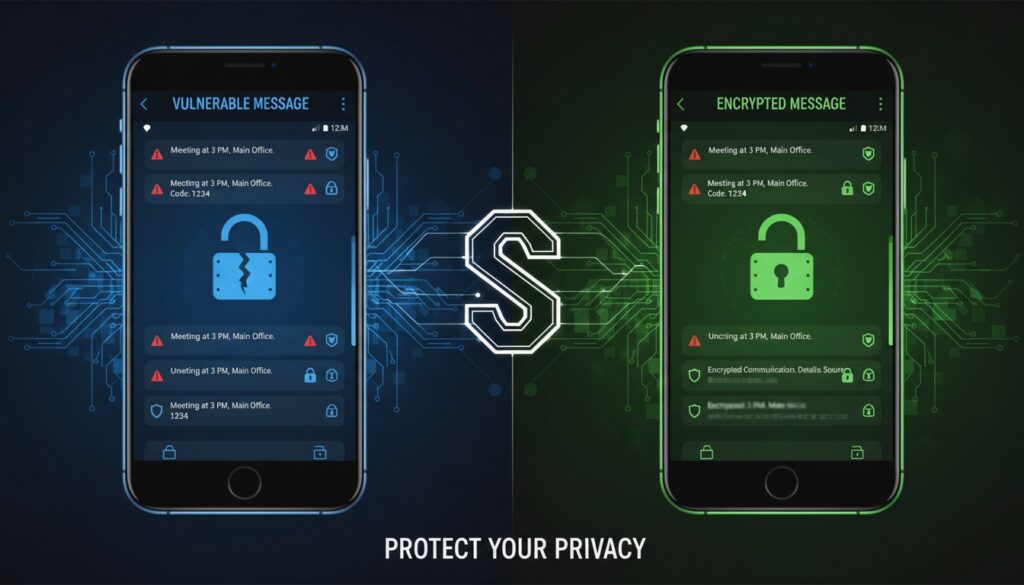
In today’s hyperconnected world, our digital conversations contain some of our most sensitive information—from personal confessions to business strategies, financial details to intimate relationships. Yet most people send messages with the same casual approach they’d use to shout across a crowded room. The reality is stark: every unencrypted message you send is potentially accessible to hackers, corporations, governments, and malicious actors.
With data breaches affecting billions of users annually and privacy regulations tightening worldwide, secure messaging has evolved from a nice-to-have feature to an absolute necessity. Whether you’re a business executive discussing merger plans, a journalist protecting sources, or simply someone who values personal privacy, understanding and implementing secure messaging practices isn’t optional anymore—it’s essential digital hygiene.
The Current State of Digital Communication Threats
Rising Cybercrime Statistics
The numbers paint a sobering picture of our digital vulnerability. According to recent cybersecurity reports:
- 4.1 billion records were exposed in data breaches in 2022 alone
- Cybercrime damages are projected to reach $10.5 trillion annually by 2025
- 95% of successful cyber attacks involve human error, often through compromised communications
- Business email compromise attacks resulted in $43 billion in losses over the past five years
- Man-in-the-middle attacks: Intercepting messages during transmission
- Server breaches: Compromising stored message databases
- Metadata harvesting: Collecting information about who, when, and where you communicate
- Government surveillance: Legal and illegal monitoring of communications
- Corporate data mining: Analyzing messages for advertising and profiling purposes
- Message creation: You type your message
- Encryption: Your device encrypts the message using a unique key
- Transmission: The encrypted message travels through servers
- Decryption: Only the recipient’s device can decrypt and display the message
- Automatic deletion: Messages disappear after a set time period
- Reduced attack surface: Less data stored means fewer opportunities for breaches
- Protection against device theft: Stolen phones contain limited message history
- Legal protection: Automatic deletion can provide some protection in legal disputes
- End-to-end encryption by default
- Perfect forward secrecy: Each message uses unique encryption keys
- Self-destructing messages with customizable timers
- Screenshot protection and copy prevention
- Minimal metadata collection
- Open-source code for independent security audits
- Two-factor authentication for account protection
- Protecting client financial information
- Securing trading strategies and market insights
- Complying with regulations like GDPR and CCPA
- Preventing insider trading accusations
- Maintaining HIPAA compliance
- Protecting patient confidentiality
- Securing medical research data
- Coordinating emergency responses
- Preserving attorney-client privilege
- Protecting case strategies
- Securing witness communications
- Maintaining confidential settlements
- Home network vulnerabilities: Personal WiFi networks often lack enterprise-grade security
- Device sharing: Family members may access work devices
- Public space communications: Working from cafes and co-working spaces increases exposure
- International travel: Communications may cross jurisdictions with different privacy laws
- Journalists and whistleblowers
- Political activists and dissidents
- High-net-worth individuals
- Public figures and celebrities
- Domestic abuse survivors
- Small business owners
- Healthcare workers
- Educators handling student data
- Anyone in a contentious divorce or custody battle
- Social media users
- Online shoppers
- Dating app users
- Anyone who values basic privacy
- Audit your current messaging apps: Identify which platforms you use and their security features
- Download a secure messaging app: Choose from reputable options like Signal, Wire, or Element
- Enable two-factor authentication: Protect your accounts with additional security layers
- Review privacy settings: Minimize data collection on existing platforms
- Migrate important conversations: Move sensitive discussions to secure platforms
- Educate your contacts: Help family and colleagues understand secure messaging benefits
- Implement message retention policies: Set appropriate auto-delete timers
- Create communication protocols: Establish guidelines for different types of conversations
- Regular security audits: Review and update your messaging security quarterly
- Stay informed: Follow cybersecurity news and platform updates
- Train your network: Encourage widespread adoption of secure messaging
- Backup important information: Securely store critical data outside messaging platforms
- Privacy enables freedom: Without privacy, people self-censor and conform
- Data aggregation risks: Individual messages may seem harmless, but patterns reveal sensitive information
- Future threat protection: Today’s innocent data could become tomorrow’s liability
- Protecting others: Your communications often involve other people’s privacy
- Seamless setup: Most apps install and configure in minutes
- Familiar interfaces: User experiences mirror popular messaging apps
- Cross-platform compatibility: Work across phones, tablets, and computers
- Rich media support: Send photos, videos, documents, and voice messages
- Start with close contacts: Begin with family and close friends
- Lead by example: Demonstrate the benefits through your own usage
- Provide gentle education: Share articles and resources about digital privacy
- Make it convenient: Help others with setup and initial configuration
- Privacy advocates push for stronger encryption protections
- Law enforcement seeks access to encrypted communications for investigations
- International cooperation on cybercrime requires balancing security and privacy
- Corporate compliance becomes more complex as regulations multiply
- Download a secure messaging app like Signal or Wire right now
- Share this article with five people who would benefit from better communication security
- Conduct a messaging audit of your current platforms and identify security gaps
- Set up auto-delete features on your most sensitive conversations
- Subscribe to our newsletter for ongoing digital security tips and updates
Common Messaging Vulnerabilities
Traditional messaging platforms expose users to multiple attack vectors:
“Privacy is not about hiding something. It’s about protecting everything that makes you human—your thoughts, relationships, and personal growth.” – Digital Rights Advocate
Understanding Encryption and Temporary Messaging
End-to-End Encryption Explained
End-to-end encryption (E2EE) ensures that only you and your intended recipient can read your messages. Here’s how it works:
The Power of Temporary Messaging
Temporary or ephemeral messaging adds another crucial layer of security:
Key Features to Look For
When choosing a secure messaging platform, prioritize these features:
Business Applications and Professional Benefits
Protecting Corporate Communications
For businesses, secure messaging isn’t just about privacy—it’s about survival and competitive advantage:
#### Financial Services
#### Healthcare Organizations
#### Legal Firms
Remote Work Security
The shift to remote work has made secure messaging even more critical:
Personal Privacy Protection Strategies
Threat Assessment for Individuals
Everyone faces different privacy risks. Consider your personal threat model:
High-Risk Individuals:
Moderate-Risk Individuals:
General Population:
Practical Implementation Steps
#### Immediate Actions (This Week)
#### Medium-term Goals (This Month)
#### Long-term Security Posture (Ongoing)
Overcoming Common Adoption Barriers
“I Have Nothing to Hide” Mentality
This common objection misunderstands the nature of privacy:
User Experience Concerns
Modern secure messaging apps have addressed most usability issues:
Network Effects Challenge
Secure messaging is most effective when your contacts also use it:
Future of Secure Communications
Emerging Technologies
Several technological developments will shape secure messaging’s future:
Quantum-Resistant Encryption: Preparing for quantum computers that could break current encryption methods
Decentralized Messaging: Blockchain and peer-to-peer technologies reducing reliance on central servers
AI-Powered Security: Machine learning detecting and preventing sophisticated attacks
Biometric Authentication: Using fingerprints, voice patterns, and other biometrics for message access
Regulatory Landscape
Governments worldwide are grappling with encryption policy:
Conclusion
Secure messaging has transformed from a tool for the paranoid to a necessity for the prudent. In an age where data breaches make headlines weekly and privacy violations have become business models, protecting your communications is both a personal responsibility and a collective imperative.
The choice isn’t between convenience and security—modern secure messaging platforms offer both. The choice is between taking control of your digital privacy or leaving your most sensitive communications vulnerable to anyone with the motivation and means to intercept them.
Every message you send is a choice. Every platform you use is a decision about how much you value your privacy and that of the people you communicate with. The tools exist, the technology works, and the need has never been greater.
Take Action: Secure Your Communications Today
Don’t wait for a personal data breach to prioritize your communication security. Start implementing secure messaging practices today: